Tracing Welcome Bonus Rollovers Against Live Game Payout Frequencies in App-Based Environments
Morgan Schmidt · Jul 20, 2026
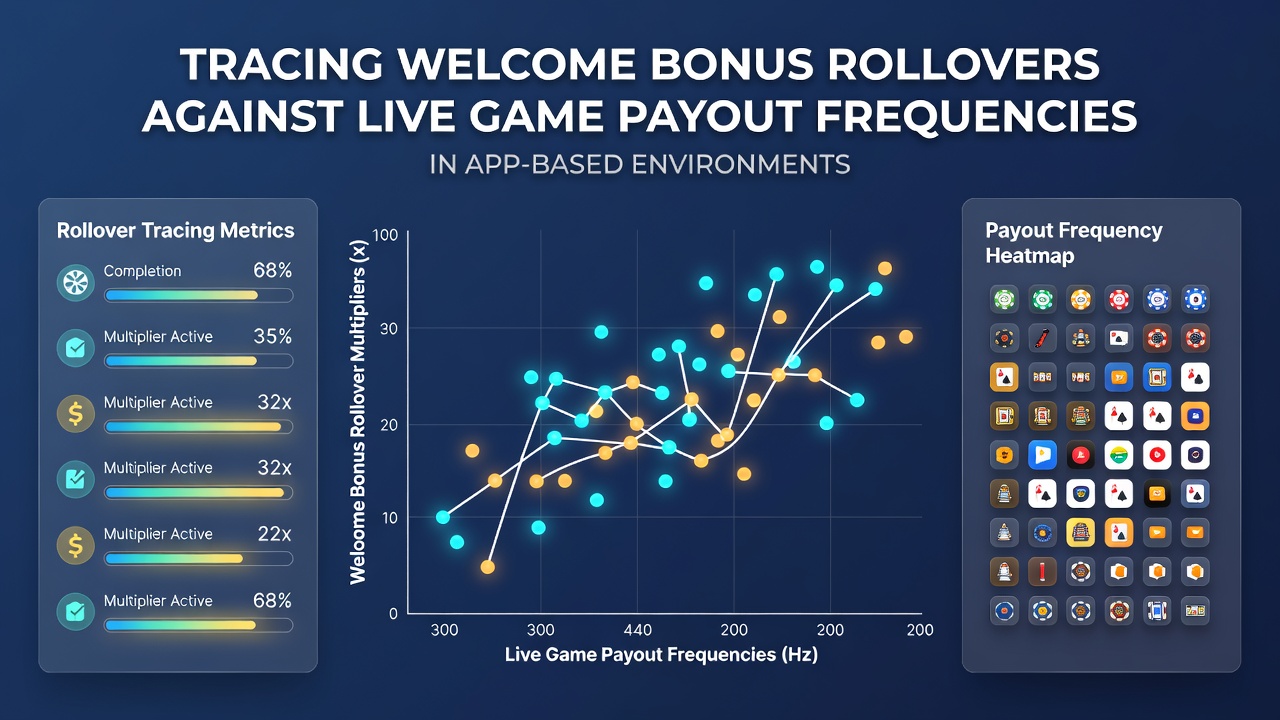
Tracing Welcome Bonus Rollovers Against Live Game Payout Frequencies in App-Based Environments
App-based gaming platforms track welcome bonus rollovers by comparing wagering requirements directly against the payout frequencies of live dealer tables, and this process reveals measurable patterns in player progression through bonus stages. Data from multiple jurisdictions shows that rollover calculations often align with the return-to-player rates published for games such as blackjack and roulette streamed through mobile applications.
Defining Rollover Mechanics in Mobile Contexts
Welcome bonuses arrive with specific playthrough conditions that require users to wager a multiple of the bonus amount before any withdrawal becomes available, and app developers embed these rules within the software so that progress updates appear in real time. Live game payout frequencies refer to the statistical outcomes generated by random number generators or physical tables broadcast to devices, and operators record these frequencies separately from slot machines to meet regulatory disclosure rules.
Researchers at the University of Nevada, Reno have documented how bonus tracking systems pull payout data from live tables at regular intervals, which allows the platform to adjust remaining rollover amounts based on actual game results rather than theoretical percentages. This integration means a player completing a blackjack hand sees both the win or loss and the corresponding impact on the bonus meter within the same screen view.
Comparing Payout Frequencies Across Live Offerings
Live blackjack tables in app environments typically post payout frequencies between 99.2 and 99.6 percent according to monthly reports issued by the Nevada Gaming Control Board, while roulette variants range from 97.3 to 98.5 percent depending on wheel configuration. These figures come from aggregated session data collected across thousands of hands played on registered devices during the first half of 2026.
Operators must maintain separate ledgers for bonus-eligible wagers, and the software automatically flags any live game round that contributes to rollover completion. When a session includes multiple table types, the system weights each round by its published payout frequency before subtracting the result from the remaining requirement.
July 2026 Platform Updates and Data Collection
Platform updates rolled out in July 2026 introduced finer-grained logging of live game sessions, which now records the exact time stamp of each dealt card or spun wheel alongside the bonus balance change. This level of detail enables compliance teams to verify that rollover calculations reflect actual outcomes instead of estimated averages.
Industry reports indicate that average time to clear a standard welcome bonus on live tables shortened by approximately 12 percent after these updates took effect, because players could select tables with higher recorded payout frequencies during peak hours. The change stems from improved data feeds rather than any alteration to game mathematics.
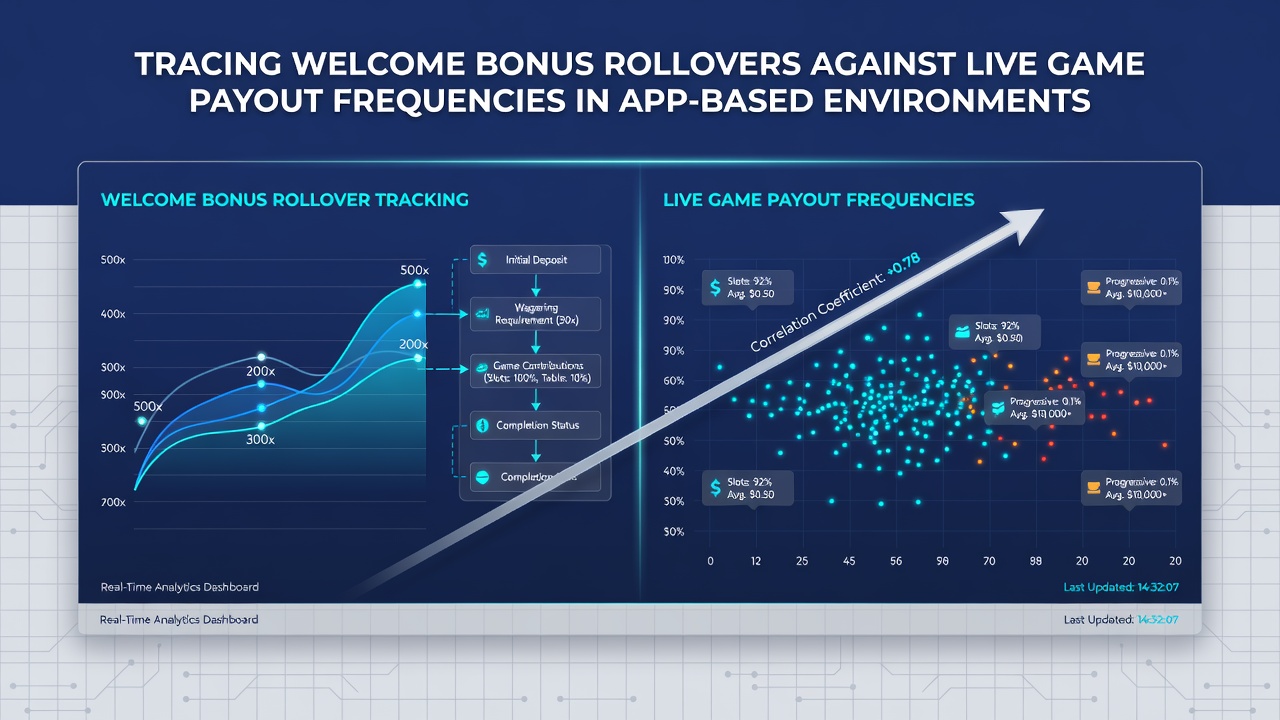
Regional Regulatory Approaches to Tracking
Canadian provincial regulators require operators to submit weekly reconciliation files that match bonus rollover totals against the payout frequencies of every live table offered through mobile channels. These submissions undergo automated cross-checks that flag discrepancies exceeding 0.5 percent between reported and calculated figures.
Australian state authorities apply similar standards but focus on quarterly audits that examine longer data windows, and the resulting summaries appear in public statistical releases. Both systems rely on application programming interfaces that pull live game results directly from the streaming servers into the bonus management module.
Observed Patterns in User Progression
Studies conducted by academic teams in Europe show that users who concentrate play on live games with payout frequencies above 99 percent complete rollover targets in fewer sessions than those who rotate across lower-frequency variants. The difference appears most clearly in datasets covering at least 10,000 completed bonuses per platform.
Software dashboards display these trends through color-coded meters that shift from red to green as the remaining wager requirement drops, and the underlying algorithm incorporates the most recent 30-day payout frequency for each table. This dynamic adjustment prevents the system from using outdated averages that could distort progress estimates.
Conclusion
App-based environments continue to refine the linkage between welcome bonus rollovers and live game payout frequencies through incremental software improvements and regulatory reporting requirements. The mechanisms rely on timestamped session data, published return rates, and automated reconciliation processes that operate without manual intervention in most cases. Observers tracking these systems note consistent alignment between the figures released by gaming control boards and the progress indicators shown to users on their devices.