Time-Bound Challenges Reshaping Reward Accumulation Patterns in Portable Entertainment Ecosystems
Anna Otto · Jul 17, 2026
Time-Bound Challenges Reshaping Reward Accumulation Patterns in Portable Entertainment Ecosystems
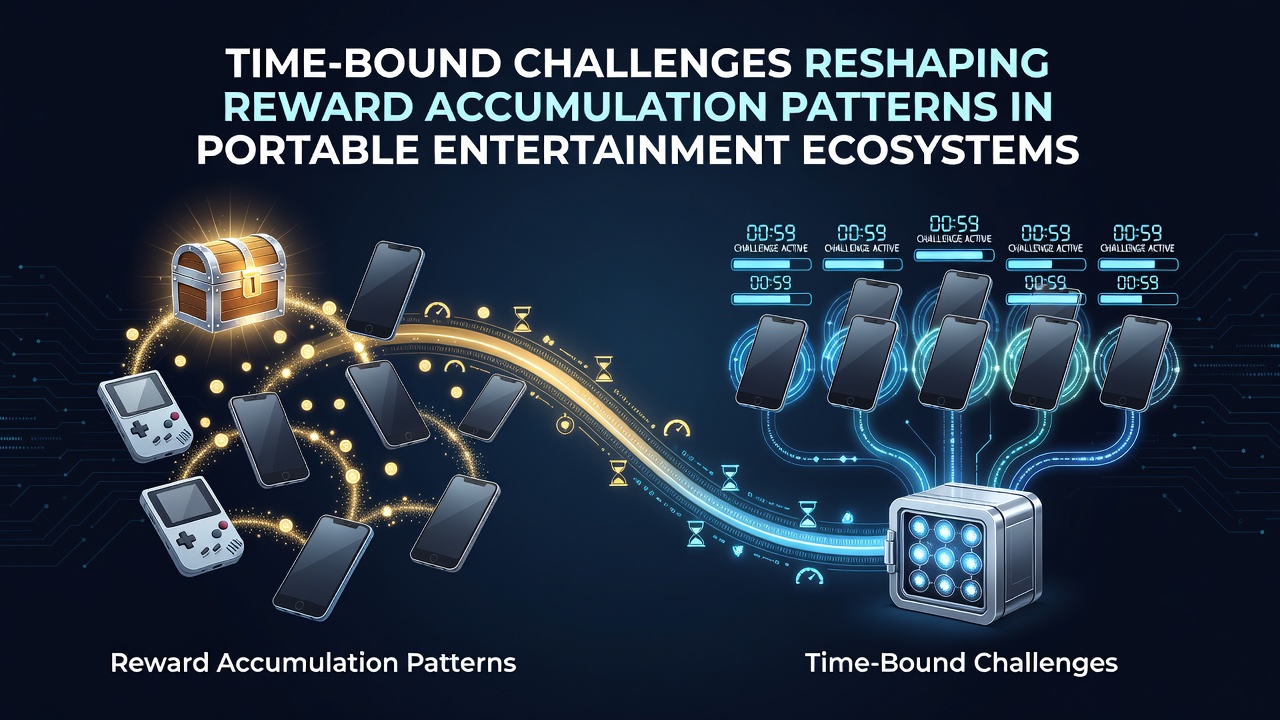
Time-bound challenges have become central features across portable entertainment ecosystems, where mobile applications deliver structured tasks that users must complete within fixed windows to earn rewards such as virtual currency, badges, and progression unlocks. These mechanisms operate through daily login streaks, event-based objectives, and limited-time missions that reset at predetermined intervals, forcing participants to adjust their engagement schedules accordingly. Data from industry tracking services shows participation rates in such challenges rising steadily through 2025 and into mid-2026, with peaks observed during seasonal periods including July when many platforms introduce summer-themed events.
Mechanics of Time-Bound Systems in Mobile Platforms
Portable entertainment applications integrate timers directly into their core loops, displaying countdowns that govern when specific rewards become available or expire. Users accumulate points or items by completing sequences of actions like watching video segments, solving puzzles, or advancing through narrative chapters before the window closes. Researchers at academic institutions have documented how these timers create layered reward paths where early completion grants bonus multipliers while delayed attempts yield reduced returns. The structure encourages repeated short sessions rather than extended continuous play because the challenge parameters reset on daily or weekly cycles.
Application developers publish patch notes that detail upcoming challenge rotations, allowing users to plan their device usage around anticipated events. In July 2026 several major platforms rolled out synchronized global challenges tied to real-world holidays, resulting in measurable spikes in concurrent user counts across regions. Observers note that synchronization across time zones requires backend systems capable of handling variable reset triggers without disrupting reward ledgers stored on user devices.
Shifts in User Accumulation Behaviors
Patterns of reward collection have moved away from steady incremental gains toward burst-oriented activity concentrated around challenge deadlines. Analytics firms report that session lengths in affected applications average 12 to 18 minutes when users focus on time-limited objectives, compared with longer sessions in open-ended content modes. This compression occurs because participants prioritize tasks that yield the highest reward density within the remaining time allocation.
Studies conducted by European research consortia indicate that users frequently switch between multiple applications to maximize overlapping challenge windows, creating cross-platform accumulation strategies. One documented case involved participants tracking challenge calendars in external productivity tools so they could align mobile sessions with available free moments during commutes or breaks. Such behavior alters traditional metrics of daily active users because engagement becomes fragmented across several ecosystems rather than concentrated in single titles.
Platform Adaptations and Infrastructure Changes
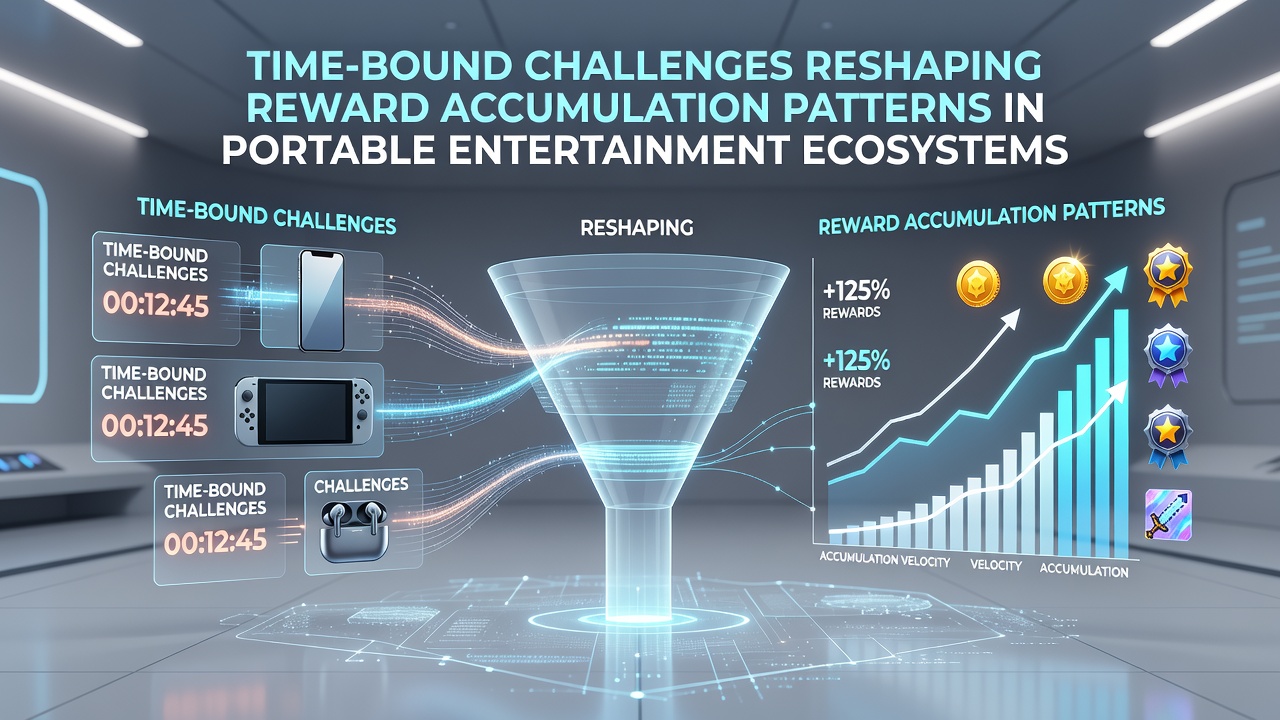
Entertainment companies have responded by refining notification systems that alert users when challenge timers approach critical thresholds. Push messages now include remaining reward values and suggested quick actions that fit within typical mobile usage patterns. Backend infrastructure upgrades completed in early 2026 improved synchronization accuracy, reducing instances where rewards failed to register due to clock drift between servers and client devices.
Regional regulatory frameworks in parts of Asia and North America require transparent disclosure of challenge expiration terms within application interfaces. Compliance documentation published by industry associations shows that these disclosures appear in standardized formats so users can review accumulation rules before committing time to specific tasks. The changes have prompted some platforms to introduce optional challenge extensions purchasable with earned currency, creating secondary accumulation loops that operate alongside primary timers.
Measurement and Reporting Developments
Third-party analytics providers have introduced new key performance indicators focused on challenge completion velocity and reward density per minute spent. Reports issued in the first half of 2026 demonstrate correlations between challenge frequency and overall retention curves, with applications maintaining at least three concurrent time-bound events showing steadier month-over-month user retention. These metrics appear in quarterly updates distributed to developers and investors.
Academic papers examining portable entertainment data sets highlight geographic variations in challenge participation, noting higher engagement density in markets where mobile data costs remain low and device storage capacity supports frequent content updates. Government statistical agencies in Australia and Canada have begun incorporating questions about time-limited mobile activities into broader digital usage surveys, generating public datasets that researchers cross-reference with proprietary platform figures.
Future Trajectories Through 2026 and Beyond
Platform operators continue testing adaptive challenge systems that adjust difficulty and reward scales based on individual user history rather than applying uniform timers across entire user bases. Early implementations of these personalized timers appeared in select titles during spring 2026, with broader deployment anticipated before the end of the year. The approach requires additional data processing layers that track historical completion rates while preserving user privacy standards mandated by regional legislation.
Interoperability initiatives among entertainment providers aim to let users transfer certain reward types across applications when time-bound challenges conclude, though technical standards for such transfers remain under development. Industry working groups have published draft specifications outlining secure transfer protocols that maintain audit trails for accumulated values.
Conclusion
Time-bound challenges continue to influence how reward accumulation occurs within portable entertainment ecosystems by imposing structured deadlines that reshape session patterns and cross-application strategies. Infrastructure adjustments, regulatory disclosures, and evolving measurement frameworks reflect ongoing adaptation to these systems. Available data through July 2026 indicates sustained integration of such mechanics across multiple platforms and regions, supported by both technical refinements and expanded public reporting efforts.