Bally’s Corporation Advances on Evoke Acquisition Talks, Eyeing Rescue for Debt-Laden William Hill Owner
Taylor Koch · Apr 20, 2026

Bally’s Corporation Advances on Evoke Acquisition Talks, Eyeing Rescue for Debt-Laden William Hill Owner
The Breaking Developments in the Deal
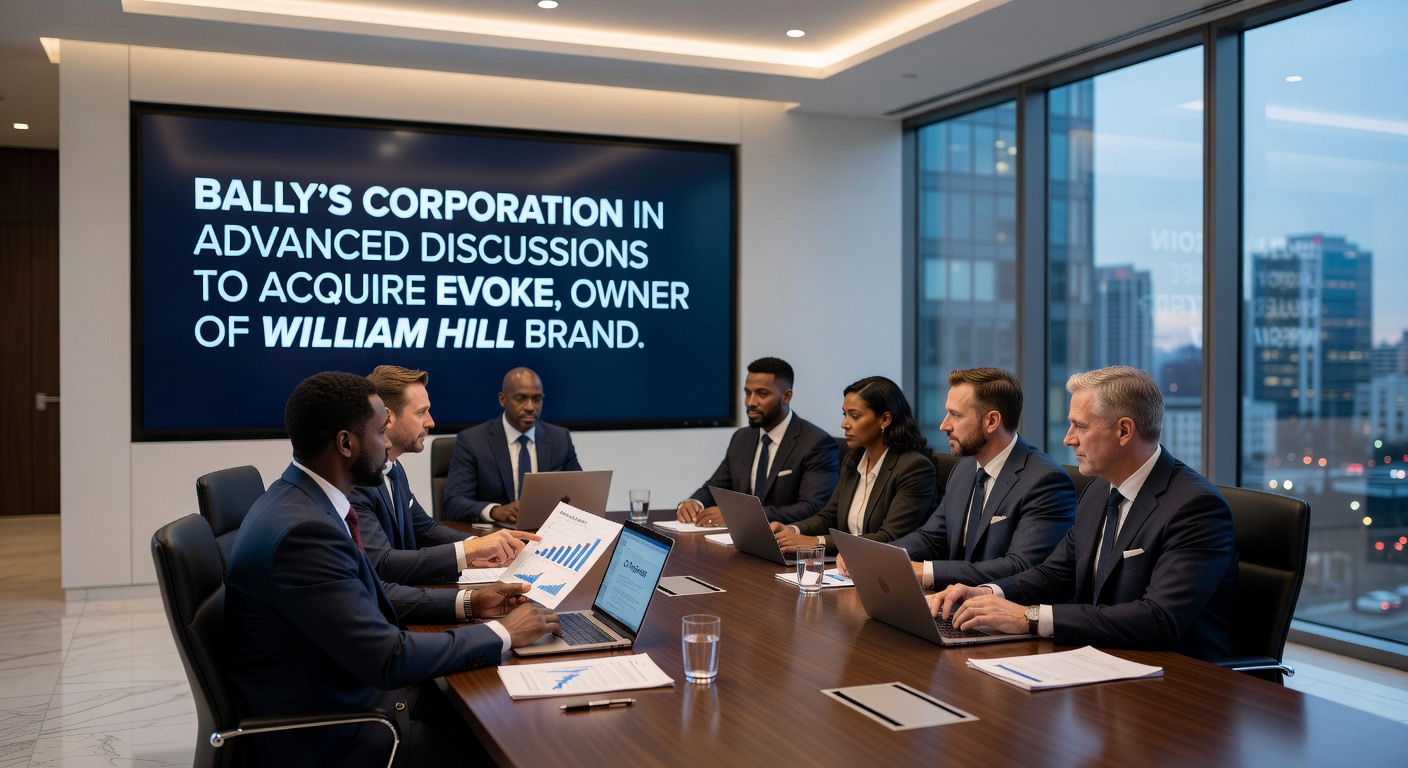
Bally’s Corporation, a prominent player in the U.S. gaming landscape, enters advanced discussions to acquire Evoke plc, the UK-based firm that owns the iconic William Hill brand—once part of 888 before a rebranding shift; this potential move surfaces as a rescue lifeline for Evoke, which battles severe financial headwinds including $2.4 billion in debt against a market capitalization of just $216.4 million, pressures intensified by recent UK betting tax hikes that squeeze margins across the sector.
Reports from Casino.org highlight how Evoke's advisors, Morgan Stanley and Rothschild, position Bally’s as the preferred bidder, with an announcement possibly landing in the coming days as of April 2026; observers note this timing aligns with Evoke's urgent need for stability, since the company's stock has plummeted amid creditor pressures and regulatory cost burdens.
What's interesting here is the speed of these talks—Bally’s, known for its aggressive expansion in both land-based casinos and online platforms, moves swiftly to capitalize on Evoke's vulnerability, potentially folding William Hill's established UK customer base into its growing portfolio; data from recent filings reveals Evoke's debt load stems from leveraged buyouts and merger costs, now compounded by tax changes that hit remote betting revenues hard.
Evoke's Financial Turmoil Unpacked
Evoke plc, formed through the 2022 merger of William Hill and 888 Holdings, inherits a legacy brand synonymous with UK sports betting yet grapples with mounting obligations; figures show $2.4 billion in total debt, dwarfing its $216.4 million market cap as trading nears April 2026 lows, while recent UK tax adjustments—specifically increases on bets placed remotely—erode profitability by an estimated 5-10% across operators, according to industry trackers.
But here's the thing: Evoke's challenges extend beyond taxes; restructuring efforts falter under creditor scrutiny, with lenders circling as cash flows tighten from subdued player activity and compliance costs; one analyst report from H2 Gambling Capital, a leading research firm focused on global gaming markets, indicates Evoke's revenue dipped 8% year-over-year in the latest quarter, prompting the search for a white knight like Bally’s.
People who've followed the brand know William Hill's shop network—over 2,300 locations—represents a tangible asset, yet online segments suffer most from fiscal squeezes, where margins shrink as governments chase revenue amid economic slowdowns; turns out, this debt-to-equity imbalance leaves little room for maneuvers without external capital.
Bally’s Strategic Positioning and Track Record
Bally’s Corporation, headquartered in Providence, Rhode Island, operates 15 casinos across 11 U.S. states and extends into online gaming through partnerships like its iGaming presence in states such as New Jersey and Pennsylvania; the company, which re-emerged via a SPAC merger in 2021, eyes international growth, particularly in regulated markets where brands like William Hill hold sway—making Evoke a logical target for cross-Atlantic expansion.
Experts have observed Bally’s pattern of bold acquisitions, from its 2022 Chicago casino license win to ventures in emerging markets; now, with Evoke on the table, Bally’s leverages advisors' endorsements from Morgan Stanley and Rothschild, firms that guide distressed sales toward viable buyers who can inject operational synergies and deleverage balance sheets.
And while Bally’s itself carries debt from expansions—around $2.9 billion per latest reports—it boasts stronger cash generation from U.S. properties, positioning it to absorb Evoke's burdens through asset sales or refinancing; that's where the rubber meets the road, as Bally’s online arm could integrate William Hill's tech stack, boosting user acquisition in Europe while tapping U.S. traffic for the legacy brand.
Key Players: Advisors and Stakeholders
Morgan Stanley and Rothschild & Co. lead Evoke's sale process, vetting bids amid time-sensitive creditor demands; these banks, with deep gaming sector ties—Morgan Stanley advising on prior deals like Caesars' William Hill buyout in 2021—deem Bally’s the frontrunner, likely due to its committed financing and strategic fit.
Creditors, holding the bulk of Evoke's senior debt, push for resolution to avoid messy restructurings; stakeholders include pension funds and hedge funds exposed via bonds, all eyeing Bally’s proven execution in turnarounds, such as its Tropicana revival in Atlantic City.
So regulators enter the picture too—U.S. bodies like the New Jersey Division of Gaming Enforcement oversee Bally’s online ops, while EU antitrust watchdogs from the European Commission would scrutinize cross-border elements, ensuring no market dominance emerges post-deal.
Broader Industry Context and Precedents
The UK gaming sector faces headwinds from tax hikes enacted in late 2025, targeting offshore betting operators and prompting consolidations; data from the European Gaming and Betting Association reveals similar pressures across Europe, where firms like Evoke see profits squeezed by 12% on average, spurring M&A waves.
Take the Caesars-William Hill saga: Caesars offloaded the UK bookie for $2.9 billion in 2022 to focus on Vegas, only for 888 to stumble under the weight; now Bally’s circles back, echoing patterns where U.S. giants acquire European assets for tech and data goldmines.
Yet observers note risks—integration hurdles, cultural clashes between U.S. casino ops and UK retail betting; one case study from Entain's Ladbrokes merger shows how blending platforms drives efficiencies, but stumbles delay synergies by up to 18 months.
Now, as April 2026 unfolds, market watchers track share movements: Evoke's stock jumps 15% on acquisition whispers, while Bally’s holds steady, signaling investor buy-in for the logic.
Potential Pathways Forward
Should the deal close, Bally’s could delist Evoke from the London Stock Exchange, streamlining under its U.S.-centric structure; financing might blend cash, stock swaps, and debt assumption, targeting $1 billion in immediate deleveraging through William Hill shop disposals or online pivots.
But here's where it gets interesting: regulatory nods from bodies like the Nevada Gaming Control Board—for Bally’s expansions—or Ireland's betting authority, given Evoke's Dublin base, become pivotal; precedents show approvals take 4-6 months, during which exclusivity pacts shield talks from rivals.
People who've studied these rescues often discover value in brand revivals—William Hill's loyalty programs, with millions of active users, offer Bally’s a foothold against DraftKings and FanDuel in Europe.
Wrapping Up the Evoke-Bally’s Watch
This saga underscores gaming's consolidation tide, where debt-laden icons like Evoke seek saviors amid fiscal storms; Bally’s, as preferred suitor, stands poised to reshape William Hill's trajectory, blending U.S. muscle with UK heritage in a deal that could announce soon, reshaping portfolios as April 2026 tax deadlines loom.
Turns out, in this high-stakes arena, the ball's in the advisors' court—Morgan Stanley and Rothschild steer toward closure, while markets hang on every whisper; for now, all eyes fix on outcomes that could redefine cross-border gaming dynamics for years ahead.